
Your cart is currently empty!
Category: Research Articles
-
“As soon as you stop jumping, you start dying”
I used to be content with a generic “athletic” lifestyle—jogging a few miles here, bench-pressing a couple of dumbbells there—until a good friend nudged me into the explosive world of plyometrics. Fast forward several years, and I can honestly say that training my fast-twitch muscle fibers has been one of the most exhilarating (and, dare I say, life-affirming) decisions I’ve ever made. And believe me, coming from someone who broke his back in high school, I wasn’t sure I’d ever feel powerful again. Spoiler alert: I do.
Let’s get scientific for a minute. A seminal study by Lexell (1995) took muscle biopsies from young and older folks and discovered that our precious fast-twitch (type II) fibers shrink in size and number as we age. In other words, if your muscles were a sports car, your fast-twitch fibers would be the turbocharged engine that slowly loses its boost after you hit 30 .
(pubmed.ncbi.nlm.nih.gov). Not only do we struggle to maintain these fibers, but without them, our ability to perform sudden, explosive movements—like dodging a falling shelf or sprinting to catch the bus—dwindles dramatically.
But here’s the good news: research in animal models has shown that these fibers are far from beyond rescue. Studies using Akt1-mediated interventions in mice demonstrated that restoring fast-twitch muscle mass can not only boost strength but also improve metabolic health.
(pmc.ncbi.nlm.nih.gov). And let’s not forget human studies comparing master athletes; these investigations reveal that individuals who engage in high-intensity, explosive training preserve fast-twitch muscle characteristics much better than their endurance-only or sedentary peers.
For me, the moment I dipped my toes into plyometrics was transformative. Part of the trick to getting faster is you have to try and push yourself to go faster than your capable. This mental effort to go truly 100% is not as easy as you may think. I remember my friend saying. “Don’t be a b*%$&” (insert your own slur) whenever he could see that I was cheating myself on the effort.
I started with simple drills (think box jumps, sprint drills, and even some quirky, gravity-defying moves that I’m convinced defied not just physics but my age as well). The challenges were real, the results even more so, and the ever-evolving routines kept my training fresh and fun. Not only did these drills awaken my fast-twitch fibers, but they also strengthened my joints, tendons, and muscles in ways that no other form of exercise ever had.
I won’t lie: it wasn’t just about looking fast. There’s a serious longevity component here. Fast-twitch fibers are crucial for quick reactions—like preventing a nasty fall—and for maintaining metabolic health. In essence, they help keep you spry, agile, and independent as you age. Think of them as your body’s emergency response team: ready to spring into action at a moment’s notice. And if you’re like me, with a back injury that still whispers reminders of my high-school mishap, having that extra explosive power isn’t just a bonus—it’s a lifesaver.
Now, here’s a fun (and slightly alarming) statistic: surveys suggest that only about 10–20% of gym-goers regularly engage in the kind of high-intensity, explosive training that targets fast-twitch fibers. That means most of us are stuck doing endless treadmill jogs and machine-based workouts that barely ruffle our fast-twitch potential. I often joke that if gym culture were a party, fast-twitch training would be the VIP section—hardly anyone gets in!
So, why are fast-twitch fibers so important for longevity? Quite simply, they keep you from turning into a human sloth. Maintaining these fibers helps you move quickly, react efficiently, and protect yourself from injury. They support everything from everyday tasks to those “oh no, I’m falling” moments, ensuring that you not only live longer but also enjoy a higher quality of life.
If you’re considering adding a little explosive flair to your routine, take it from me: dive into plyometrics, incorporate some sprinting drills, and challenge your muscles in new, dynamic ways. My journey—from being content with general athleticism to embracing the exhilarating challenge of fast-twitch training—has been nothing short of life-changing. I feel stronger, more mobile, and ready to face each day with the agility of someone half my age (and with fewer reminders of that high-school back injury!).
In the end, our fast-twitch fibers may be a bit of a fragile bunch as we age, but with the right training, they’re far from obsolete. So get out there, challenge yourself, and treat your fast-twitch fibers like the VIPs they are. Your future self might just thank you for it!
-
Weight Loss: Why You Must Go To War With Yourself
I’ve been pretty active my whole life but have upped my fitness game in the past few years, and if I could meet my past self, I’d probably slap the protein shake right out of his hands. The things I used to do? Hilarious. But we all start somewhere, and for me, it began with a challenge from my cousin: get a six-pack or the other would buy you a swimsuit of his choice, (not likely to be a pleasant experience).
At the time, I had no idea what I was doing. My approach? Starve myself and hope for the best. I cut calories way too fast, dropping from around 16-20% body fat to 11.9%. Success, right? Nope. My metabolism tanked, and I hit a plateau so hard it could’ve been a brick wall. Luckily 12% was the goal so my pride was spared.
This was my first real lesson in fat loss: the body fights back. It’s called metabolic adaptation, and I was experiencing it in full force. I was eating within a 4 hour window each day, mostly protein, and feeling miserable. If you’ve tried intermittent fasting you’ll understand. It turns out when you cut calories too aggressively, your body doesn’t just sit back and let it happen—it slows your metabolism to conserve energy. (Rosenbaum & Leibel, 2010)
Bugatti vs. Prius
Your metabolism is like the fuel efficiency of a car. If you had the metabolism of a Bugatti Veyron, you’d burn through calories like a 16-cylinder 1,200 horse power engine guzzling gas—requiring a massive intake just to function and can travel about 10 miles for every gallon of gas. But if you’ve got enough to spend $3,000,0000 on a sports car you probably not to worried about gas prices. But most of us are more like a Prius—efficient, built for endurance, and unfortunately, very good at storing energy (fat) for future use.
This efficiency is great for survival, but terrible for weight loss. Evolution didn’t design us for an era of fast food, ultra-processed snacks, and calorie overload. Your body is wired to crave high-calorie foods and store fat because, historically, food wasn’t always available.
The Science of Excess Body Fat and Hormonal Resistance
Carrying excess body fat isn’t just about aesthetics—it fundamentally alters the way your body functions. Your body fat releases hormones… ya read that again. Your body fat releases hormones. More fat means higher hormone production. The more fat you accumulate, the more likely you are to develop leptin resistance and insulin resistance—two metabolic shifts that make weight loss even harder.
- Leptin resistance: Normally, leptin signals your brain that you’re full and don’t need more food. However, when you have excess body fat, your leptin levels are constantly elevated, and your brain becomes desensitized to the signal. (Heymsfield et al., 2002) This means you stay hungry even when you’ve eaten enough.
- Insulin resistance: Insulin’s job is to regulate blood sugar by shuttling nutrients into your cells for energy. With excess fat, your cells become less responsive to insulin, leading to increased fat storage and making weight loss even more difficult. (Shulman, 2000)
These two factors create a cycle—your body craves more food, stores more fat, and makes it harder to lose weight. This is why the longer you stay overweight, the more effort it takes to reverse it.
It’s Not Just About Appearance
Now before you go all “body positivity” on me let me just say if your happy where your at I have no problems with that. However, I think everyone should at least get in incredible shape once in their life and then decide what they want to do from there. Don’t tell me you’re happy where you’re at having never been in shape before, odds are you just don’t have the information or discipline to get there even if you “wanted” to. If you disagree tell it to the almost 300,000 bariatric (overweight) surgeries performed annually that if there was a button to magically be in great shape you wouldn’t press it. I’ll wait.
For years, I saw the fitness industry as purely about aesthetics, but over time, I realized that how you feel, function, and move is just as important it’s just not as marketable. That being said, if you’re already putting effort into how you present yourself—whether that’s wearing nice clothes, styling your hair, or looking put together—why not extend that effort to your physique?
Looking fit might not be everything, but it does influence how you’re perceived. The Halo Effect is real—people subconsciously associate a lean, muscular physique with discipline, confidence, and success. While that shouldn’t be the only reason to get in shape, it’s an undeniable factor in how we navigate the world.
The Role of Dopamine and Food Addiction
Dopamine, the “feel-good” hormone, plays a major role in why we crave and overeat highly processed foods. Just like other addictive substances, these foods trigger a dopamine release, reinforcing behaviors that make us eat more. The book Ultra-Processed People goes into detail about how the food industry engineers foods to be hyper-palatable, making it easier to consume massive amounts before your body realizes it’s full.
Back in the day, bread was tough and required soaking in milk or water to eat. Now, you can practically eat a Big Mac with a spoon. The softness, the ease of chewing, the perfect balance of salt, sugar, and fat—it’s all designed to make you eat more.
So “listen to your body” may have worked in the past but unfortunately that time has come and gone.
Learning to Do It Right
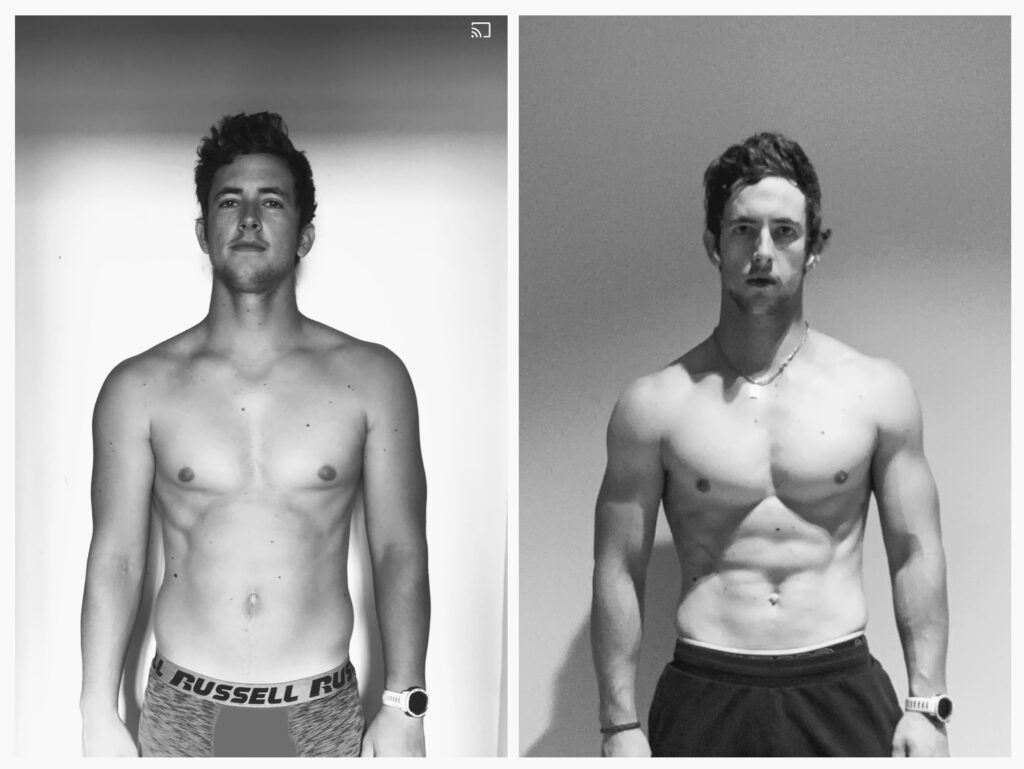
After that initial crash-and-burn, I started getting serious about learning how fat loss actually works. I experimented with different diets, training styles, and calorie tracking methods. Eventually, I did a deep dive into meticulous calorie counting, consistent weigh-ins, and monitoring my body composition. Everything was documented in an excel sheet every day. The result? I got down to 7.9% body fat. Now am I gonna win any body building competitions with that? Certainly not but that was never the goal.
The journey wasn’t just about numbers. I learned a lot about myself in the process. I became the guy who weighed his food, who said “no thank you” when offered desert, and who treated every bite of food like it was a financial transaction. It wasn’t always fun, but it gave me an appreciation for the science of weight loss. Taught me added discipline, impulse control and mental stamina, and more respect for people with impressive physiques. You can say its because they were born that way, and I’m not saying you’re 100% wrong but I’ve been there and I said that, and turns out I just didn’t know.
The Reality of Maintaining Low Body Fat
I had heard that getting a six pack is great but it is not sustainable. Even body builders have off seasons. To maintain a six pack you would be limited to eating chicken and broccoli and starving all the time. Regardless I wanted to try it, I wanted to have “been there, done that, and got the t-shirt” at least once. And I also wanted to know if they were right.
Losing the weight was just the beginning. Maintaining my new body composition required just as much effort, if not more. Research suggests that once you reach your goal, you need to maintain it for at least a year to establish a new metabolic set point. (Dulloo & Montani, 2015) Your body doesn’t just instantly accept its new state—it takes time to adjust. This means you’ll be hungry for a while!
The reality; I only had to hyperfocus on calories for a about 3 months of that year. The habits I built during my cut carried over. I naturally ate cleaner. I instinctively portioned my meals better. As I gradually reintroduced calories back into my diet through a process called reverse dieting I wasn’t starving all the time. I could still indulge on weekends. Turns out, your body adapts to a new normal.
I developed what I call an “internal calorie budget.” Just like you know roughly how much you can spend in a month without checking your bank account every day, I knew how much I could eat. If I started to gain weight, I tightened things up. If I lost too much, I ate a little more.
This is Set-Point Theory in action, which suggests that your body has a preferred weight range that it defends through metabolic and hormonal regulation. (Müller et al., 2010) If you slowly lose weight and maintain it long enough, your body will adjust, making it easier to stay lean without constant effort.
The Final Experiment: Bulking and Cutting Like a Pro
After maintaining my lean physique for a year, I decided to try a “bulk.” I gained 20 pounds over four months, then cut back down over six weeks. The difference? This time, my metabolism was working for me. I wasn’t starving, my strength was up, and fat loss was happening without the misery I’d experienced before. That’s not to say it was effortless.
Remember my first attempt at intermittent fasting, where I starved myself and plateaued at 11.9%? This time, I had already gotten down to 10% in a month and a half, eating more than I did in my first go-around. This is the benefit of having your body on your side.
But I wouldn’t be here if I hadn’t gone to war with it first. There were many times where I went to bed hungry. Many irritable days, dealing with a headache as my hormones stubbornly fought back. Many times I looked at the scale after a hard long week and saw no results. Many times thinking that a hamburger and fries would solve my problems. And many times I had to tell me my body to just deal with it because to quote David Goggins “I don’t stop when I’m tired, I stop when I’m done.”
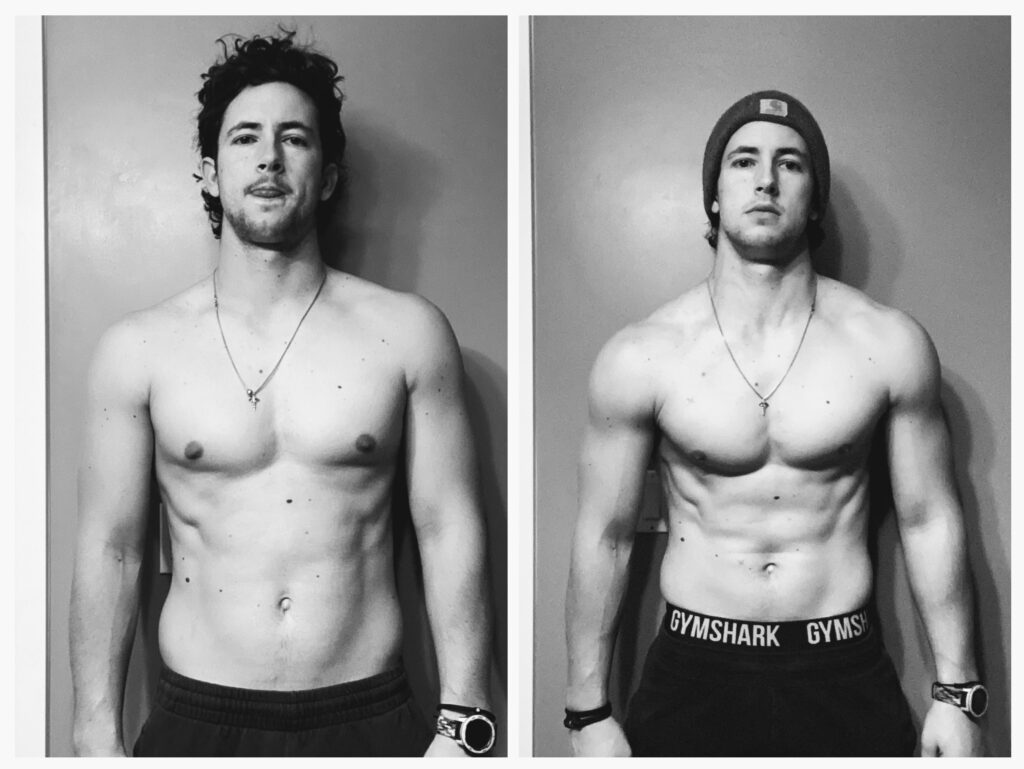
6 week cut from 16% BF to 10% BF So, if you’re stuck in the cycle of crash diets and frustration, trust the process, play the long game, and give your body the credit it deserves.
-
Ballistic Training: Explosive Gains (and Sore Everything)
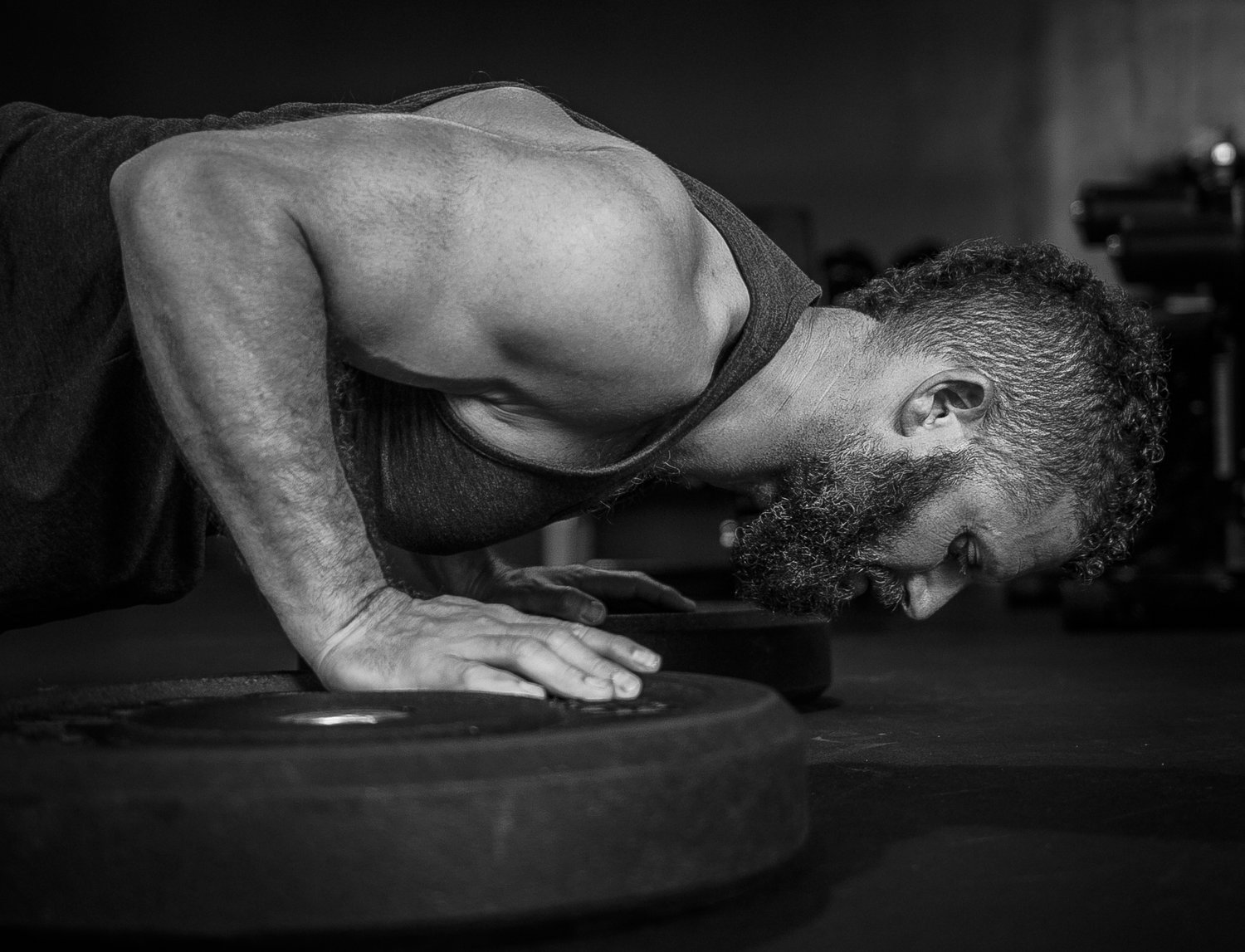
For the past few weeks, I’ve been diving headfirst (not literally, but close) into ballistic training. You know, the kind of training where you throw things, jump explosively, and generally make the gym look like an action movie set. I’ve incorporated it into my plyometric workouts and even sprinkled in some ballistic push-ups on chest days. The results? Let’s just say my muscles have sent multiple cease-and-desist letters to my brain.
But before we get into my personal struggles and triumphs, let’s break down what science has to say about ballistic training. Because believe it or not, people actually study this stuff. And the findings? Pretty darn interesting.
The Science of Ballistic Training (or: How to Justify Throwing Weights Around)
A study published in the Journal of Strength and Conditioning Research (which I imagine is just a bunch of buff scientists in lab coats arguing about creatine) looked at the effects of combining ballistic training with traditional resistance exercises over eight weeks. Participants either lifted weights the old-fashioned way or added ballistic movements like jumps and explosive throws. The result? The ballistic group saw greater improvements in power and even a sneaky boost in their one-rep max. Translation: lifting heavy and moving fast is a winning combo.
Another study examined shot put throwers—one group did heavy strength training, while the other focused on ballistic-power movements. Turns out, the strength group got bigger muscles, while the ballistic-power group improved their explosive performance without packing on as much size. So, if you’re looking to be a powerhouse without turning into the Hulk (or if, your shirts already fit too snug), ballistic training might be your new best friend.
And then there’s the baseball study—athletes who did ballistic resistance training for ten weeks saw noticeable improvements in their throwing speed and base running. As someone who doesn’t play baseball but does enjoy launching med balls across the gym, I find this very validating.
My Ballistic Experiment (or: How I Learned to Fly… Briefly)
Since adding ballistic push-ups to my routine, I’ve noticed a few things:
- I spend a lot more time airborne during push-ups.
- My triceps and chest now scream at me in languages I don’t understand.
- The combination of traditional pressing movements with explosive push-ups has made my regular reps feel more powerful, like I’ve unlocked some hidden chest potential.
On plyometric days, I’ve been mixing in med ball throws and jumps before my regular explosive work. The logic? Post-activation potentiation (fancy term for “tricking your body into being more powerful”). And let me tell you—when you throw a heavy ball as hard as possible before a set of max-effort jumps, you feel like an absolute beast. Until the next day, when your legs stage a rebellion.
Final Thoughts (or: Why You Should Start Ballistic Training… If You Dare)
If you’re looking to boost power, increase athletic performance, or just make your workouts more fun (and mildly dangerous), ballistic training is worth a shot. Science backs it, and my soreness confirms it. Plus, there’s something incredibly satisfying about launching weights, jumping higher, and feeling like a superhero mid-push-up. Just don’t blame me when your muscles start filing complaints.
-
Why the Flat Bench Press Can Take a Seat: My Love Affair with Incline Presses
Alright, let’s get something out of the way: I’ve never been a flat barbell bench guy. I know, I know – it’s like confessing you take the tomato of your hamburger (which for me is also true). “stop being a child” The flat bench is the classic, the stereotypical barbell lift that gets you all the manly street cred, right? But for me, it’s more like a nauseating rollercoaster ride I never wanted to get on. Light-headedness, and near-death experiences—sounds like fun, right? I think I’ll pass.
The Struggle is Real: The Barbell Bench Press Chronicles
I remember the first time I tried flat barbell bench pressing, thinking, “Okay, this is where the magic happens. Time to get big.” The first few sets felt like I was in the gym doing it—you know, getting that ego boost. But here’s the problem: halfway through a set, I felt my vision narrowing, my head getting woozy, and my core scrambling to hold me together. I was contracting my core like a man possessed because I knew it was the “right thing to do,” but honestly, I just didn’t want to pass out under the bar. And let’s not forget the high-risk, low-reward scenario where a failed rep could end with me on the floor or—worst case—getting a barbell around my neck. Not exactly a workout goal I was striving for.
Then there are those razzberry marks on my back. What is it with that? No amount of chalk or positioning seems to solve that issue. And if I don’t have a spotter? Forget it, I’m not testing my fate. It’s a recipe for disaster, folks.
Dumbbells, Cables, and No Ego: My Favorite Tools for a Better Chest
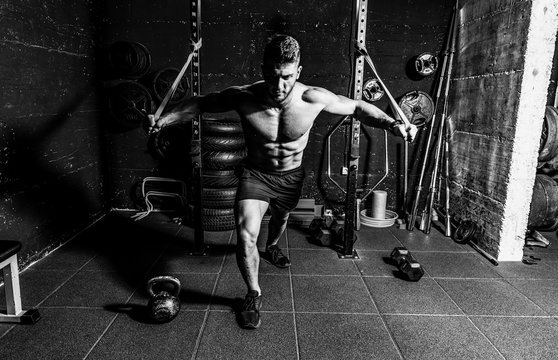
Now, let’s talk about what really works for me. I’m all about that mind-muscle connection. That’s the sweet spot for hypertrophy. For me, the incline press and using dumbbells or cables have been game-changers. No more light-headedness, no more “I’m going to die under this barbell” panic, and most importantly, no more settling for a mediocre chest pump. These exercises allow me to feel every single contraction, something the flat barbell bench never quite did for me.
Let’s be honest—dumbbells and cables are the unsung heroes. They give you the freedom to rotate your wrists, adjust your angles, and hit the muscles just right. It’s like having a paintbrush and a blank canvas—if you know what you’re doing, you can create a masterpiece. Sure, you might not be hitting Arnold Schwarzenegger levels of pump (unless you’ve unlocked the secrets of the universe), but let’s just say you can definitely get closer to the ideal chest than with a rigid barbell press.
Hypertrophy: The Science of Getting Bigger
Now, onto the real muscle magic: hypertrophy. If you’re looking to build some serious muscle mass, you need to create the right environment for growth. And that means fatiguing the muscle fibers to stimulate hypertrophy. When I’m doing incline presses with dumbbells or cables, I’m focused on achieving the strongest contraction possible. You need that burn, that stretch, and that sweet, sweet pump to get the right signals to your body for muscle growth.
The thing with bench presses, especially flat bench, is that it’s hard to go to true failure unless you’re benching with a spotter who can bail you out when the barbell feels like it’s weighing 10,000 pounds. And for me, if I can’t take a set to failure (with safe alternatives like dumbbells and cables), I’m not getting the muscle activation I need. As a result, I never really felt like I was getting the best contraction or that I was maximally activating those muscle fibers. With dumbbells and cables, I can push myself, fail safely, and keep squeezing out those extra reps until my chest is so pumped it might just burst.
Why the Upper Chest is Key to Aesthetic Gains
And here’s the kicker: If you really want a physique that screams aesthetic—you’ve got to focus on the upper chest. That’s where the magic happens. You can have the biggest, strongest middle chest in the world, but if your upper chest isn’t on point, your overall look will be off. It’s all about balance, and incline presses are your secret weapon for that.
Research shows that the incline press does a much better job at activating more of the upper chest fibers (specifically the clavicular head of the pectoralis major). A 2009 study published in the Journal of Strength and Conditioning Research found that incline presses lead to greater activation of the upper chest compared to flat presses. And let’s face it—those upper chest gains are what make your chest look like a solid, well-defined mountain, not some flat plateau.
The Hypertrophy Angle: Why Angle Matters More Than Ego
Here’s the truth: You don’t need a flat bench press to get a big, muscular chest. In fact, it can be downright inefficient when you focus on the wrong angles. The incline press, whether it’s with dumbbells, cables, or machines, is a much better choice for targeting those upper chest fibers and stimulating hypertrophy. And trust me, when those fibers get activated, the muscle starts growing. It’s not just about lifting heavy—it’s about lifting smart.
Remember, hypertrophy doesn’t happen by accident. It’s a science. You need to focus on creating the right conditions: maximum contraction, proper angles, and consistent fatigue of the muscle belly. The incline press does all of this. Plus, it’s just safer. No barbell coming crashing down on your neck, no spots needed, and your risk of getting a head injury is considerably lower.
Wrapping Up: No More Ego Lifting, Just Gains
Look, the flat barbell bench press might be the “king of lifts” in some circles, but it’s not for everyone. And for me, it just doesn’t fit the bill. I’d rather focus on what really works: dumbbells, cables, and the all-important incline press. It’s safer, more effective, and, dare I say, more fun. If you’re chasing after hypertrophy, focusing on the upper chest, and ensuring that sweet mind-muscle connection is on point, incline presses are where it’s at.
Remember: train smart, train safe, and always listen to your body. Your chest will thank you later.
-

Chasing the Elusive One-Rep Max: PRs, Sibling Rivalries, and Unlocking My Inner Mom-Strength
Chasing the Elusive One-Rep Max: When PRs Soar and When They Flop
There are few things more satisfying in the gym than slapping an extra plate on the bar and absolutely smashing a new one-rep max (1RM). But let’s be honest—sometimes you walk in feeling strong, only to get stapled by a weight that you crushed just last week. What gives?
Some days, everything is clicking, and I’ll beat my previous max by 10+ pounds. Other days, I can’t even sniff my old max, and it feels like I’m trying to bench press a truck. It’s frustrating, but there are a lot of factors at play. So, let’s break down what a 1RM actually is, why some days it feels impossible, and how you can properly prep for a successful PR attempt.
What is a One-Rep Max?
Your one-rep max isn’t just about brute strength. It’s your body’s ability to activate every available muscle fiber possible to contribute to the lift. And guess what? Your body doesn’t actually want to do this. It’s a survival mechanism. If you could access 100% of your strength all the time, you’d be at risk of tearing muscles, snapping tendons, and generally wrecking yourself.
A bit of a graphic example: There are nerve agents that cause your muscles to contract so violently that people have cracked their own teeth or even damaged their spine. Not exactly the kind of “maxing out” we want. But the fact remains—under extreme circumstances (like adrenaline-fueled moments where moms lift cars off their kids), the human body is capable of insane feats of strength. Your job is to convince your body, under safe conditions, to unleash more of that power on command.
Why Some Days You’re a PR Machine and Other Days You’re Weak as a Kitten
So why does your max fluctuate so much? A few things come into play:
1. Training Frequency and Specificity
I’ve learned this firsthand. My brother and I have a friendly bench press rivalry, and for a while, despite me outweighing him by nearly 40 pounds, he had a higher max. Why? Because I never did flat barbell bench. I was an incline dumbbell guy through and through. Once I finally dedicated some time to actually training the bench press, my max shot up by 40 pounds in just a few months. It’s not steroids—it’s just practicing the damn lift.
Study-backed insight: Research by Ahtiainen et al. (2003) in the European Journal of Applied Physiology found that strength gains are maximized when you practice a specific lift frequently with progressive overload. In short, if you want to get better at a lift, you need to do that lift consistently.
2. Central Nervous System (CNS) Readiness
A one-rep max is just as much about your nervous system as it is about your muscles. If your CNS isn’t primed, you’re not going to hit that lift, no matter how strong you are. The CNS controls how many muscle fibers fire, and if it’s not warmed up or is overly fatigued, you won’t be able to generate max force.
Study-backed insight: Sale (2002) in the Journal of Applied Physiology highlighted how post-activation potentiation (PAP) can help. Performing a near-maximal lift (e.g., 90-95% 1RM for a single rep) before your attempt can actually improve force output by “waking up” your nervous system.
3. Sleep, Nutrition, and Recovery
One week you’re eating well, sleeping like a champ, and feeling unstoppable. The next week, you’re running on fumes because your wife was sick, you stayed up late, and your body is still recovering. Guess what? Your 1RM is going to take a hit. Maxing out is incredibly taxing, and if you’re not recovered, you’re just not going to perform at your peak.
Study-backed insight: Haff et al. (2003) in Medicine & Science in Sports & Exercise found that lifters who had at least 3-5 minutes of rest between max attempts performed significantly better than those who rushed their attempts. Recovery matters—both in training and in between heavy singles.
How to Properly Prep for a One-Rep Max Attempt
Now that we know what affects a 1RM, let’s talk about how to set yourself up for success on test day. The goal is to prime your body and nervous system without burning yourself out.
1RM Testing Protocol
Step 1: General Warm-Up (5-10 minutes)
- Light cardio (rower, jump rope, or cycling)
- Dynamic stretching (hip openers, arm circles, leg swings)
- Mobility work for the specific lift (e.g., shoulder mobility for bench, ankle mobility for squats)
Step 2: Specific Warm-Up
Progressive loading to prime your nervous system while minimizing fatigue:
- 50% of estimated 1RM × 5 reps
- 70% of estimated 1RM × 3 reps
- 85% of estimated 1RM × 2 reps
- 90-95% of estimated 1RM × 1 rep (Optional for PAP effect)
- 100%+ attempt (Go for it!)
Step 3: Rest Between Attempts
- 3-5 minutes between heavy singles to allow full recovery
Bonus Tip: Know Your Body
Some people hit their peak strength early in the session, while others need more time. I’m the latter. I’ve had days where my best jump or best lift comes after hours of grinding. Why? Who knows. Some people burn out fast, others ramp up slowly. Experiment and see what works best for you.
Final Thoughts
A 1RM is the ultimate test of strength, but hitting a new PR isn’t just about brute force—it’s about preparing your body and nervous system to fire on all cylinders. Train the lift, recover properly, warm up effectively, and understand that some days you’re just not going to have it. That’s part of the game.
Now go hit the gym and chase that next PR—but remember, some days you’re the lifter, and some days you’re the barbell.
-
Can Music Make You a Gym Beast? Science Says Yes.
If you’ve ever found yourself suddenly lifting heavier just because your favorite song came on, you’re not imagining things. Science backs it up—music can actually make you stronger, faster, and more enduring. But how? Let’s break down what the nerds in lab coats have found.
The Studies (AKA People on Treadmills with Headphones)
A bunch of researchers, including Karageorghis & Terry (1997), strapped people onto treadmills and had them run while listening to different types of music. Some got fast-paced bangers, some got slower tunes, and some poor souls got nothing but their own thoughts. The results? The fast-paced music group lasted significantly longer, reported lower perceived exertion, and probably looked way cooler while running.
Then in 2012, another group of researchers (Bacon, Myers, & Karageorghis) tested how motivational music impacted endurance. They had people cycle while listening to either upbeat music or nothing at all. Turns out, the motivational music made them pedal longer and harder. Translation? Hype playlists = gains.
Music and Strength Training – The Hype Is Real
A study in the Journal of Strength and Conditioning Research (2010) took a bunch of gym-goers and had them do sprint and weightlifting exercises with and without music. Those with music—especially fast-tempo tracks—sprinted faster and lifted heavier. Another study by Biagini et al. (2014) tested music’s effect before lifting and found that listening to pump-up tracks before hitting the weights increased power and explosiveness.
In short, blasting metal, rap, or whatever gets your adrenaline going before a lift might actually make you stronger. So, go ahead—cue up that pre-workout anthem.
My Personal Experience – The Soundtrack to PRs
My top artists and songs every year on Spotify are straight from my workout playlist. If I’m going for a 1RM, you better believe I’m making sure I’ve got the right song playing. There’s nothing worse than getting hyped up for a big lift and having a terrible song (or worse, a commercial) hit mid-set. Heaven help me if that happens—I’m either failing the lift or setting a new rage PR. The right music makes all the difference, and science just backs up what I already knew.
How They Measured It – Science Stuff, But Simple
Scientists measured results based on time to exhaustion (how long participants could go before tapping out), power output (how much force they generated), and perceived effort (basically, how much they felt like dying). Across multiple studies, people who had music consistently performed better and felt like the workout was easier than those without it.
Key Takeaways for Your Gym Sessions
- Fast-tempo music helps with endurance. If you’re doing cardio, find songs with a beat around 120-140 BPM.
- Motivational music can push you further. If the lyrics make you want to take over the world, it’s a good choice.
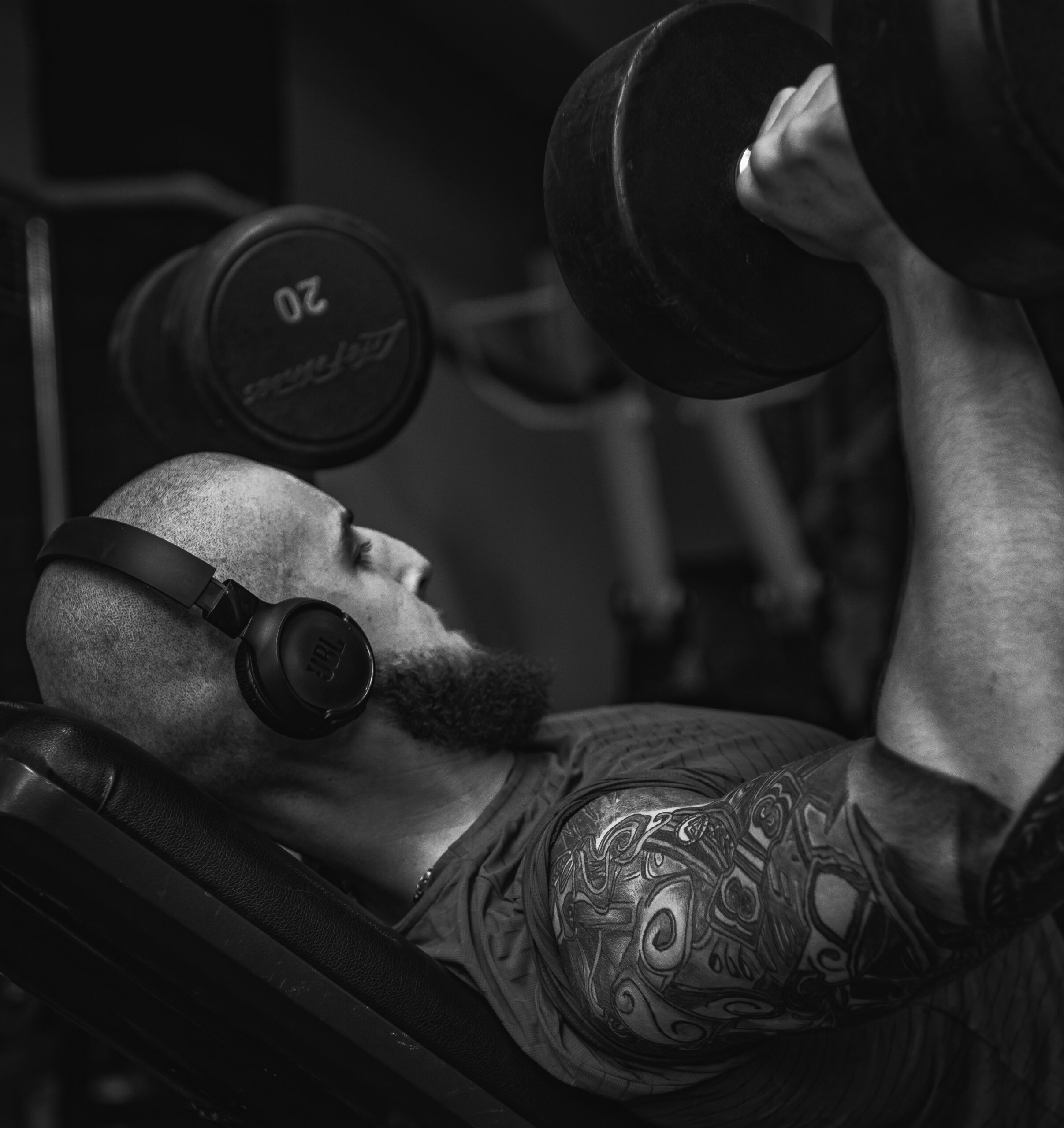
- Pre-lift music boosts strength. So don’t be afraid to put your headphones on and get in the zone before a big set.
- Silence is the enemy. Unless you’re a monk or enjoy listening to your own breathing, music is scientifically proven to make workouts feel easier and more enjoyable.
So next time you hit the gym, don’t just wing it—curate a playlist that makes you feel like an absolute beast. Science says it’ll pay off.