Your cart is currently empty!
Week #17 “From C-Section to Sit Ups”
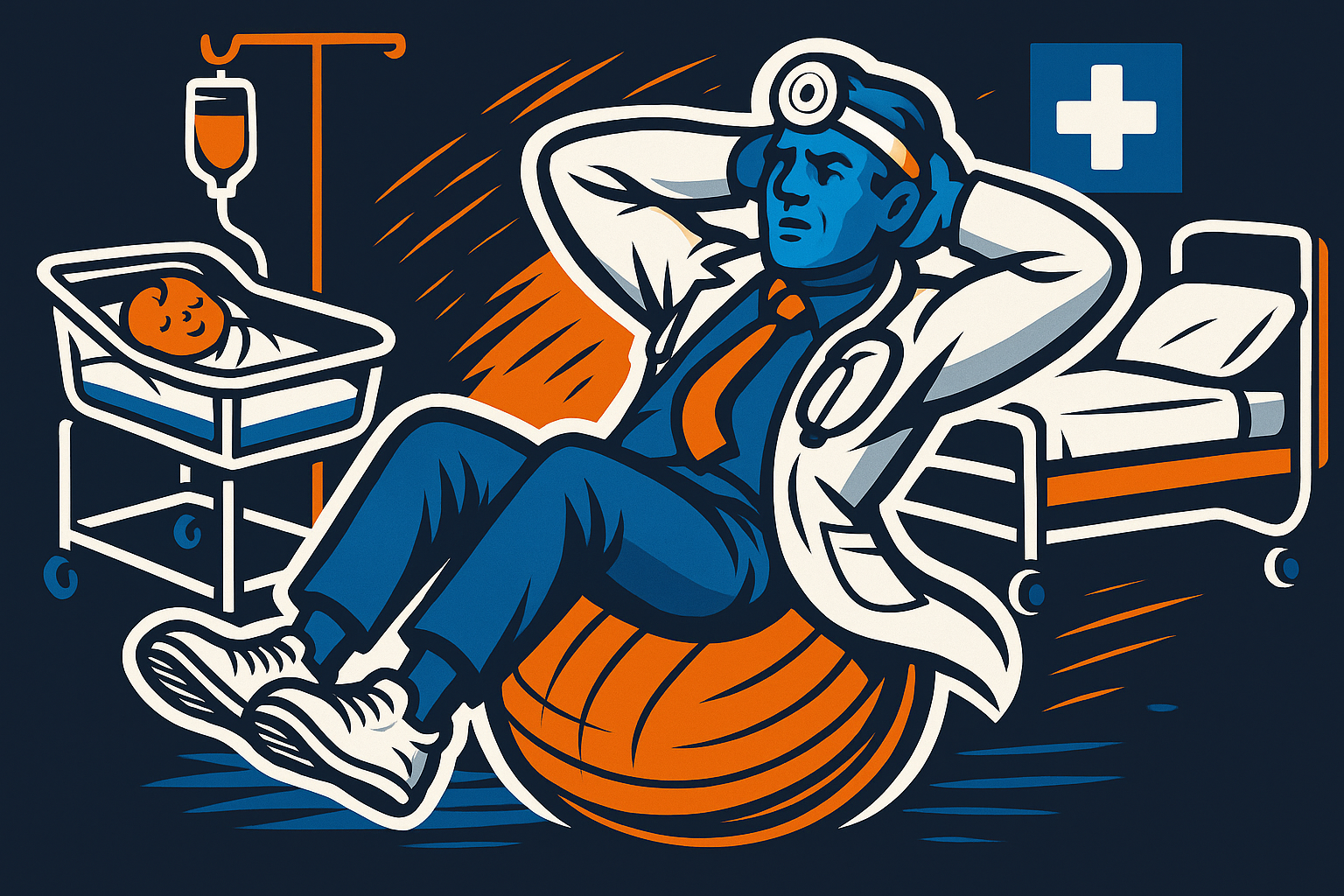
My workout journal from that week might as well have evaporated into the ether. Before you crack it open and start judging my lack of detailed notes, pump your brakes. Last Friday night, instead of tracking sets and reps, my wife and I rolled into the hospital for a scheduled induction to welcome our second child—a little baby boy who decided to announce himself in C-section style.
My wife—five-foot-one, one-hundred pounds of pure “Yes-I-can” (as her dad endearingly calls her; and accurately so)—was determined to prove our first-child doctor’s anatomical theory wrong. After our daughter arrived via c-section, we were told it had nothing to do with her effort, but rather that her birth canal “might just be too small.” So with renewed fire—and under the counsel of a new physician who said she could give vaginal delivery a shot even though our little guy was measuring big—she went into labor at 39 weeks.
Twenty four hours of contractions later—and four straight hours of pushing—the attending physician gently informed us that the baby still wouldn’t clear the pubic bone. Heartbroken but immensely proud of her superhuman effort, we made our way back into the OR. Thirty minutes later, baby boy #2 arrived via the same incision as his sister.
Twenty-four hours into her post-op recovery—just as we thought we were out of the woods—my wife began writhing in flank pain so excruciating it might as well have come from a passing kidney stone. They whisked her back into the OR and removed what turned out to be a fragment of her kidney lodged in her ureter—an ultra-rare complication that nobody ever warns you about. It seems that her Herculean labor effort strained her body so intensely that a piece of her own kidney literally broke off.
While my wife—former track athlete, rugby player, and certified badass—recovered from that second procedure, I traded gym time for hospital hallways. Sure, I managed the occasional burst of push-ups by her bedside, a few sit-ups on her birthing ball, and some mobility stretches to keep me from feeling like a soggy noodle. But truly, my training log lay dormant for six straight days as I focused on caring for my family.
When Science Meets Reality: Postpartum Recovery Isn’t One-Size-Fits-All
The sports-science world loves to study young male athletes, but postpartum rehab? That field feels like the Wild West. Women are routinely told not to lift more than ten pounds for weeks—an amusing suggestion if your newborn weighs eleven, which happened to my mother. And while you’re warned about diastasis recti and loose skin, solid, practical guidance on rebuilding strength and tissue mobility is scarce.
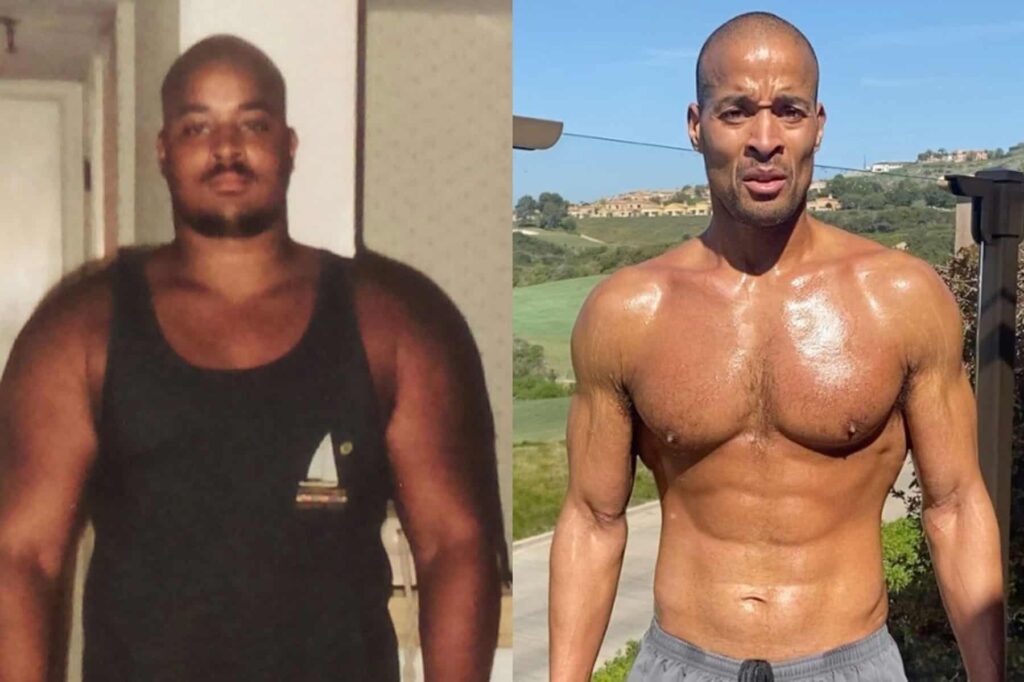
Enter David Goggins’ “500 Rule.” You might know Goggins for dropping over a hundred pounds in three months, yet emerging with hardly a stretch mark in sight. His secret? Towering rep counts with progressively lighter loads—forcing constant muscle pumps that drive oxygen-starved muscle fibers to call for new capillaries and blood vessels. This angiogenesis doesn’t just bulk up muscle; it benefits the overlying skin and fascia, improving nutrient delivery and waste removal—key for skin elasticity and scar remodeling .
For postpartum women, that translates to a golden window. Relaxin—the hormone that softens pelvic ligaments and abdominal tissues for birth—lingers for months, keeping tissues malleable. Scar tissue, however, begins solidifying within weeks. So the goal becomes clear: gently load the area early to guide healing, then progressively challenge it before the body “locks in” its post-birth architecture.
A Blueprint for Rebuild: My Wife’s Roadmap
Weeks 0–2 (Healing Phase):
- Pain-guided movement: Gentle diaphragmatic breathing and pelvic tilts to encourage blood flow without overstressing incisions.
- E-Stim Activation: Fifteen-minute sessions over the rectus abdominus to recruit muscle fibers and boost local circulation.
Weeks 3–6 (Reactivation Phase):
- High-rep, low-load work: Bodyweight air squats, banded deadlifts, and cable crunches—keeping the pump alive while respecting ligament laxity.
- Scar mobilization: Light massage and myofascial release techniques to prevent adhesions and promote tissue glide.
Weeks 7+ (Hypertrophy & Strength Phase):
- Progressive resistance: Gradually increasing load on core exercises, maintaining rep ranges of 20–30 to sustain capillary stimulus.
- Functional integration: Farmer carries, loaded carries, and compound lifts to restore full-body coordination.
Throughout, she’s monitored her pain on a scale of 0–10, allowing up to a 4/10 discomfort that doesn’t intensify during or after exercise. If the pain creeps higher, we dial back.
Lessons Learned Beyond the Lab
Watching my wife bulldoze through two surgeries and then methodically rebuild her strength reminded me that the parameters we study in journals—hormone levels, capillary growth, fascial remodeling—only tell half the story. The other half is grit, patience, and flexibility when the manual offers blank pages.
For any partner or parent in the trenches: prioritize empathy over programming. Swapping your personal bests for supportive squats and midnight feed “sets” doesn’t diminish your credibility—it expands your capacity as an athlete, teammate, and human being.
And when you’re finally ready to lace up your own shoes again, remember this: recovery is its own event. Respect its phases, lean into the low-load hypertrophy that nurtures both muscle and skin, and cherish every incremental gain—because the strongest athletes aren’t defined by bar speed alone, but by their ability to rally back from the toughest of rounds.