
Your cart is currently empty!
Author: Nelson Brown
-

Week #2 Toddler-Induced Bicep Cramps
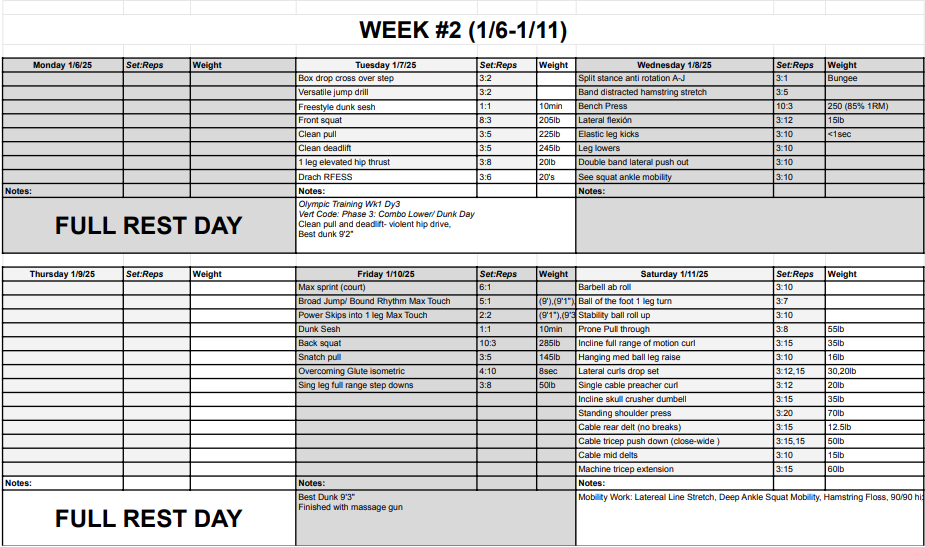
Week two of my training journey has come and gone, leaving me with a mix of triumphs and sore muscles. After indulging in a two-day recovery period on Sunday and Monday, I felt rejuvenated and ready to tackle the challenges ahead.
Tuesday: Embracing Plyometrics and Olympic Lifts
The day began with my usual warm-up routine: a session with the massage gun to ease muscle tension, followed by static stretching to improve flexibility. Incorporating light plyometric movements like skipping and sprinting not only prepared my body for the workout but also contributes to enhancing my vertical jump performance.
I included isometric holds such as wall sits and glute bridges to activate key muscle groups. The main workout consisted of a series of bodyweight plyometric exercises. By allowing full recovery between sets and maintaining low repetition ranges, I targeted type II fast-twitch muscle fibers, essential for explosive power.
Transitioning to Olympic lifts, I focused on single lifts near my one-rep max for multiple sets, followed by lighter, higher-rep exercises to complement the main lift. This approach aimed to enhance neuromuscular recruitment, allowing for strength gains without significant muscle hypertrophy.
Wednesday: Prioritizing Rest and Recovery
Recognizing the importance of rest, I dedicated Wednesday to recovery and mobility work. Incorporating anterior core exercises strengthened my abdominals, and a heavy bench press session targeted high weight for low reps across multiple sets. This method effectively developed neuromuscular recruitment, enabling strength improvements without substantial increases in muscle size.
Friday: Revisiting Plyometrics and Olympic Lifts
Friday’s routine mirrored Tuesday’s, with a focus on plyometric exercises and Olympic lifts. Emphasizing explosive movements and strength development, I ensured adequate rest between sets to maintain performance quality.
Saturday: Upper Body Maintenance
After a week centered on lower body training, I dedicated Saturday to upper body maintenance, focusing on biceps, triceps, and shoulders. The goal was purely aesthetic—to maintain muscle mass and ensure a balanced physique. While upper body strength doesn’t directly contribute to vertical jump performance, maintaining muscle mass is important for overall balance and appearance.
This session was intense enough that later, when I tried to pick up my two-year-old daughter, my fatigued biceps protested, reminding me of the workout’s intensity. They cramped on me so tight I had to set her down. Who would have thought training you arms would make it so you couldn’t pick up your kids?
Conclusion
Week two presented its challenges, but each session brought me closer to my goals. Balancing intensity with adequate recovery remains crucial. Listening to my body and adjusting the training load as needed will help prevent overtraining and promote continuous improvement
-
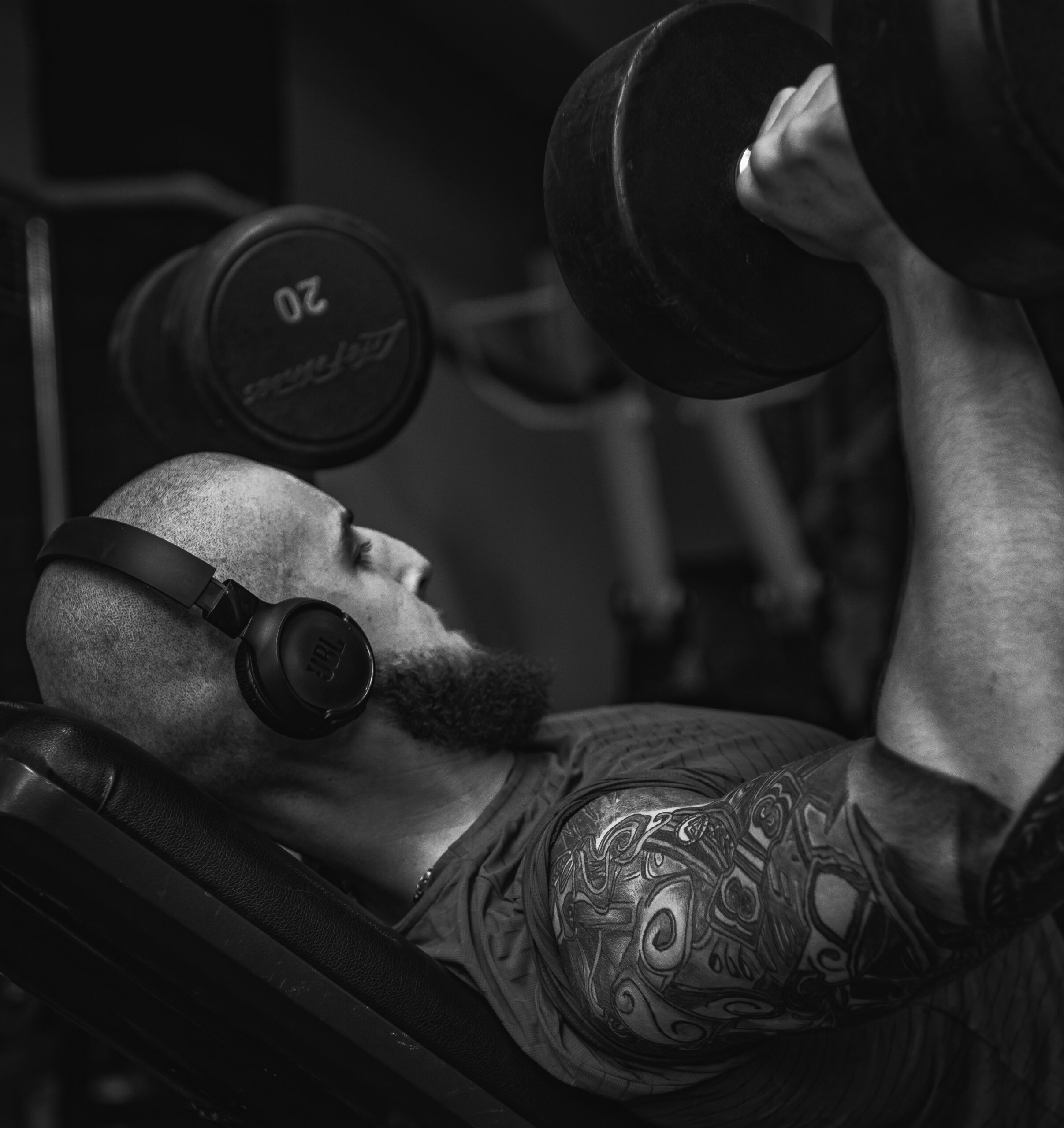
Can Music Make You a Gym Beast? Science Says Yes.
If you’ve ever found yourself suddenly lifting heavier just because your favorite song came on, you’re not imagining things. Science backs it up—music can actually make you stronger, faster, and more enduring. But how? Let’s break down what the nerds in lab coats have found.
The Studies (AKA People on Treadmills with Headphones)
A bunch of researchers, including Karageorghis & Terry (1997), strapped people onto treadmills and had them run while listening to different types of music. Some got fast-paced bangers, some got slower tunes, and some poor souls got nothing but their own thoughts. The results? The fast-paced music group lasted significantly longer, reported lower perceived exertion, and probably looked way cooler while running.
Then in 2012, another group of researchers (Bacon, Myers, & Karageorghis) tested how motivational music impacted endurance. They had people cycle while listening to either upbeat music or nothing at all. Turns out, the motivational music made them pedal longer and harder. Translation? Hype playlists = gains.
Music and Strength Training – The Hype Is Real
A study in the Journal of Strength and Conditioning Research (2010) took a bunch of gym-goers and had them do sprint and weightlifting exercises with and without music. Those with music—especially fast-tempo tracks—sprinted faster and lifted heavier. Another study by Biagini et al. (2014) tested music’s effect before lifting and found that listening to pump-up tracks before hitting the weights increased power and explosiveness.
In short, blasting metal, rap, or whatever gets your adrenaline going before a lift might actually make you stronger. So, go ahead—cue up that pre-workout anthem.
My Personal Experience – The Soundtrack to PRs
My top artists and songs every year on Spotify are straight from my workout playlist. If I’m going for a 1RM, you better believe I’m making sure I’ve got the right song playing. There’s nothing worse than getting hyped up for a big lift and having a terrible song (or worse, a commercial) hit mid-set. Heaven help me if that happens—I’m either failing the lift or setting a new rage PR. The right music makes all the difference, and science just backs up what I already knew.
How They Measured It – Science Stuff, But Simple
Scientists measured results based on time to exhaustion (how long participants could go before tapping out), power output (how much force they generated), and perceived effort (basically, how much they felt like dying). Across multiple studies, people who had music consistently performed better and felt like the workout was easier than those without it.
Key Takeaways for Your Gym Sessions
- Fast-tempo music helps with endurance. If you’re doing cardio, find songs with a beat around 120-140 BPM.
- Motivational music can push you further. If the lyrics make you want to take over the world, it’s a good choice.
- Pre-lift music boosts strength. So don’t be afraid to put your headphones on and get in the zone before a big set.
- Silence is the enemy. Unless you’re a monk or enjoy listening to your own breathing, music is scientifically proven to make workouts feel easier and more enjoyable.
So next time you hit the gym, don’t just wing it—curate a playlist that makes you feel like an absolute beast. Science says it’ll pay off.
-
Week #1 “From Snatch to Dunk: My Olympic Lifting Journey to Rim-Hanging Glory”
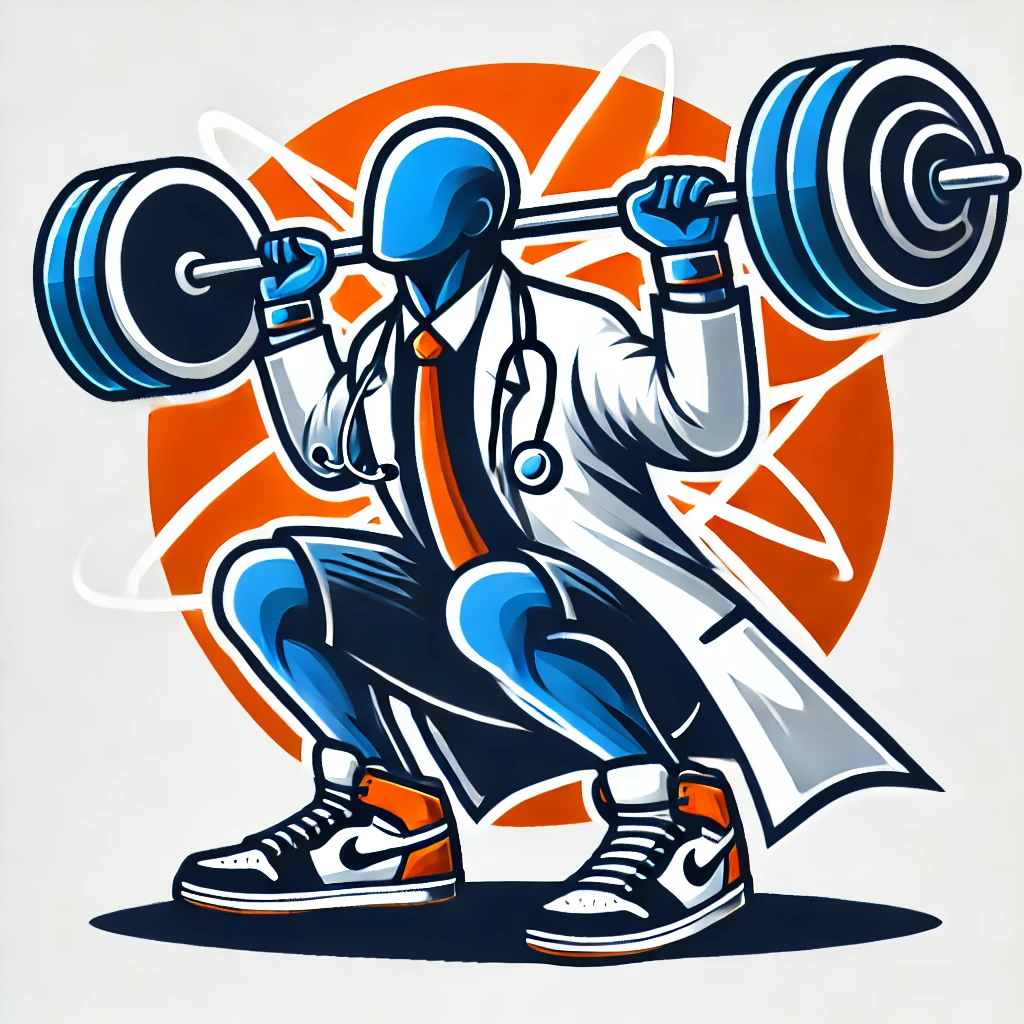
Hey fitness enthusiasts! Buckle up as I take you through my latest training regimen—a rollercoaster of Olympic lifts, plyometrics, and the ever-crucial recovery sessions. Let’s dive into the nitty-gritty, sprinkled with some science.
Neuromuscular Recruitment: The Olympic Odyssey
I kicked off my routine focusing on neuromuscular recruitment through heavy Olympic lifts. For those scratching their heads, neuromuscular recruitment is essentially getting as many muscle fibers as possible to join the party during a lift. Studies have shown that Olympic weightlifting exercises and their derivatives have relatively high motor recruitment, with more complex exercises requiring more units.
Remember, it’s not about the weight but the form and control. If you’re lifting more than me, hats off! Just ensure you’re moving safely and activating the right muscle groups.
Chest Day Extravaganza
Mid-routine, I shifted gears to prevent my chest muscles from feeling neglected. Enter: high-volume chest day. The goal? Provide enough stimulus to require recovery and sustain the chest muscle without much stimulus throughout the week.
This approach aligns with the SAID principle—Specific Adaptation to Imposed Demand—which means our bodies adapt specifically to the demands we place on them.
So, by bombarding the chest with volume once a week, I ensure it stays robust without overtraining.
Lower Body Powerhouse
Back to the grind with a focus on lower body strength and explosiveness. These exercises not only build strength but also enhance power output, crucial for athletic performance.
Upper Body Light Day
I also incorporate a lighter day, targeting upper body muscle groups to maintain balance. The idea here is to apply the SAID principle without confusing the body with equally strong stimuli for the upper and lower body. Prioritizing recovery and rest is paramount.
Rest and Reflect
A day dedicated to recovery, foam rolling, and contemplating why I subject myself to this routine. But hey, no pain, no gain, right?
Final Thoughts
This regimen was about testing the waters of my joint health and stability before diving into a more demanding phase. If you’re following along, adjust the weights to your personal level. The key is controlled movements, safety, and proper muscle activation.
As a benchmark, I’m starting with the ability to dunk a basketball comfortably with two hands on a 9-foot rim. The goal is a clean two-handed dunk on a standard 10-foot rim, with the ability to hang from it—because style points matter.
Remember, specifics on exercise form can be found on YouTube or Google. And always listen to your body; it’s the only one you’ve got.
Stay strong, stay safe, and keep lifting!
-

Every Journey begins with a single…jump!
After years of jumping attempts that barely cleared a phone book, I’ve decided it’s time to take my vertical leap from “meh” to “magnificent.” Drawing inspiration from experts like Paul Fabritz and Andy Galpin, along with my own trial-and-error escapades, I’m crafting a program aimed at transforming average athletes into elite jumpers.
- Strength Training: Building a solid foundation with exercises like squats and deadlifts to power up those leg muscles.
- Plyometrics: Incorporating explosive movements such as box jumps and depth jumps to boost fast-twitch muscle fibers.
- Flexibility and Mobility: Ensuring joints and muscles are limber through dynamic stretching and mobility drills.
- Nutrition: Fueling the body with a balanced diet rich in protein, complex carbs, and healthy fats to support training and recovery.
- Rest and Recovery: Prioritizing sleep and rest days to allow muscles to repair and grow stronger.
The Game Plan:
By blending these elements, I’m on a mission to defy gravity and achieve a vertical leap that would make even the most seasoned athletes nod in approval. Stay tuned as I document this journey, sharing the highs, the lows, and the occasional faceplants along the way.
For those looking to embark on a similar quest, remember: it’s not about where you start, but the dedication and effort you put into the journey. Let’s leap into greatness together!